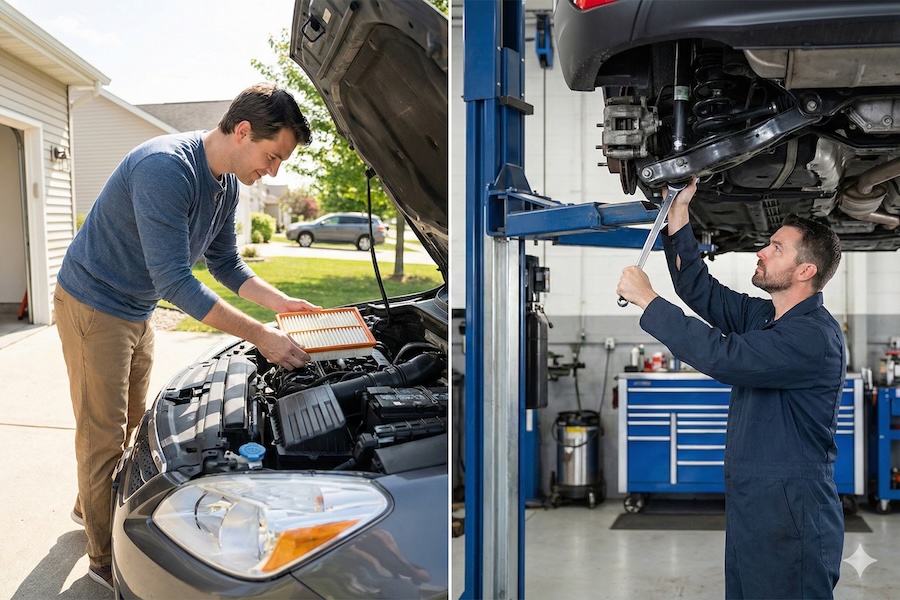
There is a real sense of accomplishment that comes with fixing your own car. It can save money and help you understand the machine you rely on daily. However, modern vehicles are essentially rolling computers with highly complex mechanical systems. Knowing the difference between a safe Saturday afternoon project and a dangerous undertaking is crucial for your safety and your wallet.
Green Light DIY Tasks
Some maintenance items are designed to be user-friendly. These are great entry points for home mechanics because they require few tools, have low physical risk and low consequences if messed up.
Replacing windshield wiper blades is a perfect example. It’s inexpensive, quick and dramatically improves safety. Similarly, swapping out engine air filters and cabin air filters usually only involves unclipping a plastic housing. Replacing accessible light bulbs is another good DIY option, though some modern headlights require removing the entire bumper cover, which changes the complexity significantly. If you can do these without jacking up the car or touching critical systems, go for it.
Areas That Require Caution
The line should be drawn firmly at systems that affect your ability to steer or stop. Brake jobs often look deceptively simple on internet tutorials. Yet, missing a single caliper bolt, failing to bleed the lines correctly or using the wrong torque specs can lead to total brake failure on the highway.
Suspension work is another danger zone. Components like struts are under immense pressure. Mishandling a spring compressor can cause severe injury. Furthermore, incorrect installation will ruin your alignment and chew through tires in a matter of weeks.
The Hidden Costs of DIY Failures
We frequently see vehicles towed in after a failed home repair attempt. What started as a plan to save a few hundred dollars ends up costing much more due to stripped bolts, broken sensors or damaged wiring harnesses.
Professional shops invest thousands in advanced diagnostic computers that talk to your car’s specific modules. Trying to diagnose a check engine light by just throwing parts at it is rarely cost-effective. Beyond the tools, professional service comes with a warranty on parts and labor that a driveway repair simply cannot offer. If safety is on the line, the risk is rarely worth the reward.