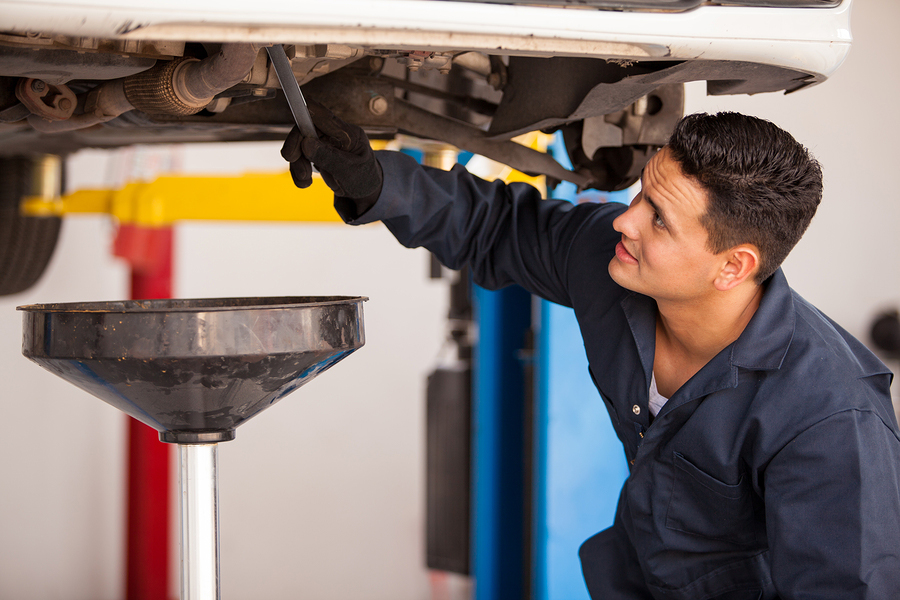
Preventative Maintenance of Changing the Oil

Preventative Maintenance of Changing the Oil

Your car manual has a preventative maintenance schedule that you should follow. That might say 5,000 or 10,000 miles between your oil changes. So, why does your mechanic tell you to change it sooner? There are circumstances where you should change your oil every 3,000 miles, religiously.

Preventative Maintenance

The most common preventative maintenance is to change your car’s oil every 3,000 miles. But, will the mechanic  tell you it is okay to wait until 10,000 miles? The oil change jockey probably will not. There are some circumstances where you absolutely should not wait until 10,000 miles to do your maintenance.

Reasons to Change Your Oil at 3,000 Miles

  • You drive long distances in the hot desert
  • Every day you start and stop a lot in heavy, city traffic
  • You drive mostly in slow, heavy traffic in cold weather
  • You often drive on dirt roads or in a lot of haboobs
  • Your vehicle is used for towing cars, trailers or boats
  • You have a turbocharged engine

The reason you need that preventative maintenance on your car in the situations listed above is because your car is going to need the additives that are in the oil. After a car runs around for 3,000 miles, those important additives that protect your engine are going to degrade. This is just fine for ideal driving situations. But if you are a little bit hard on your engine with your driving habits or have the less than ideal road conditions, it is best to error on the side of caution and get those oils changes every 3,000 miles.

If you drive like that little, old lady from Pasadena, then carry on. Get your oil changed every 10,000 miles or five years, whichever comes first. Your preventative maintenance doesn’t have to be urgent.


Flat Tire While Driving Down the 101

Flat Tire While Driving Down the 101

Getting a flat tire while you’re driving, especially on the freeway, can be a dangerous situation. There are things you should do to ensure that you can come to a safe stop without injuring yourself or other drivers on the road.

Handling a Flat Tire Emergency

So, you’re clipping along at 85mph on the 101 and suddenly, without warning, you hear an explosion and the telltale thump, thump, thump. Oh no! Well, don’t flip out. Here are some tips you should commit to memory for when it happens to you.

What To Do When You Get a Flat Tire

1. Stay Calm
2. Grip the wheel tightly and hold it steady
3. Resist the urge to slam on the brakes
4. Turn on your emergency flashers
5. Ease up on the gas pedal quite a bit to reduce speed
6. Turn on your blinker to get over to the shoulder
7. Check your rear mirror and side mirrors constantly for dangerously fast vehicles
8. Keep moving over one lane at a time until you’re safely at the shoulder of the road
9. Drive very slowly to an exit, don’t park on the freeway

It will seem like a good idea to park right there on the side of the freeway, but keep driving to the nearest exit ramp to get off the freeway. Sure, you will bend the wheel probably. It is very easy for your car to be hit when it is on the side of the freeway. So, it is worth buying a new wheel rather than losing your life or just your car.

Call A1 Performance Auto Repair

Once you are safely off the freeway and parked on a side road, give us a call. We’ll be happy to take a look at that tire to see if we can repair it. Always remember, safety first.

Subscribe To Our Newsletter

Subscribe To Our Newsletter

Join our mailing list to receive coupons and news from our team.

You have Successfully Subscribed!

Pin It on Pinterest