Why Your Check Engine Light Will Fail Your California Smog Test
You booked your smog appointment, drove to the station and waited in line — only to fail the moment the technician saw your dashboard. It’s one of the most frustrating surprises California drivers face, and it’s also one of the most preventable. Here’s what’s actually happening and why the state takes it so seriously.
The Check Engine Light Is an Automatic Disqualifier
California’s Bureau of Automotive Repair requires that no malfunction indicator lights (MILs) be illuminated during a smog inspection. That means a lit check engine light — regardless of the underlying reason — is an immediate failure before the tailpipe probe even comes out. The light is your car’s onboard diagnostic system (OBD-II) flagging an active fault code, and state law treats that as evidence of an emissions-related problem until proven otherwise.
What many drivers don’t realize is that the OBD-II system monitors far more than just the engine. It watches your catalytic converter efficiency, oxygen sensor response times, evaporative emission system integrity, exhaust gas recirculation and more. A fault in any one of these systems can trigger the light, and all of them directly affect how much pollution your car puts into California’s air.
The “Ready Monitor” Problem Nobody Warns You About
Here’s a trap that catches a lot of drivers. They get the check engine light diagnosed, clear the code and drive straight to the smog station — only to fail again. Why? Because clearing a code also resets your car’s readiness monitors. These are self-tests the OBD-II system runs during normal driving to confirm emissions systems are working correctly. Until enough drive cycles have completed and those monitors report “ready,” the smog inspector will fail your vehicle even with the light off.
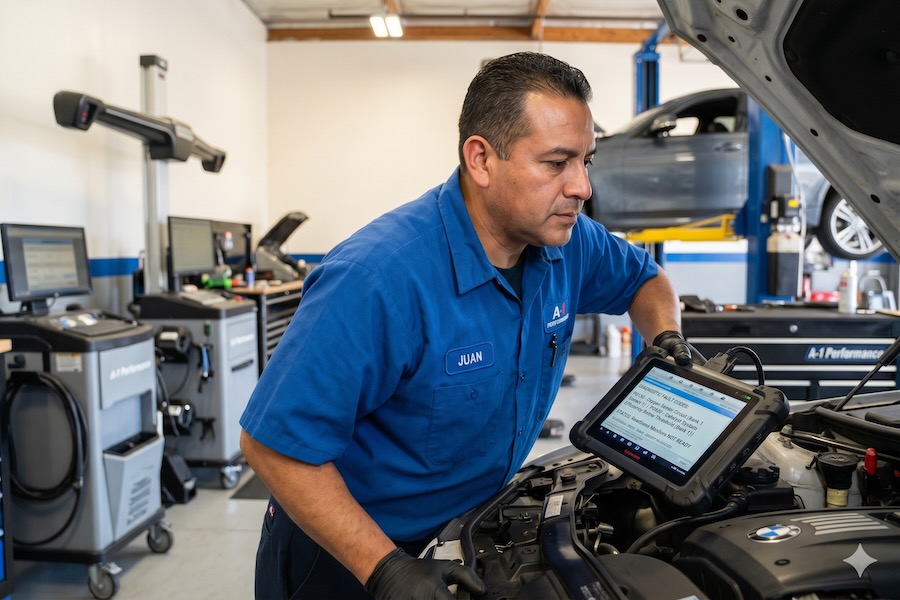
The fix is a proper drive cycle — usually a combination of highway and city driving over one to three days — before you test. Your technician can read your monitor status with a scan tool and tell you whether you’re ready to test.
The bottom line is simple: if your check engine light comes on, address it promptly. A minor sensor issue caught early is far less expensive than a failed smog, a retest fee and a trip back to the shop.