The Hidden Maintenance Every San Jose Hybrid and EV Owner Overlooks
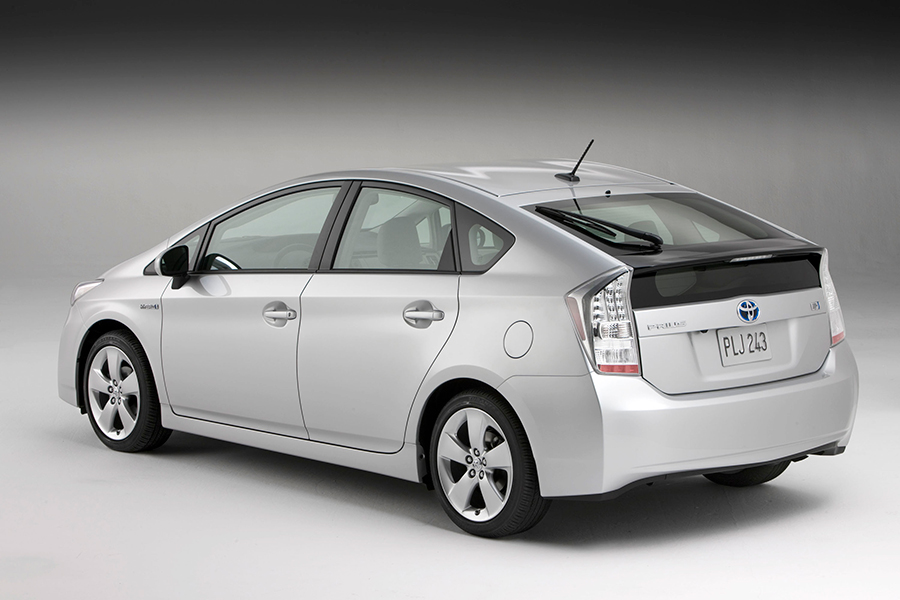
Silicon Valley leads the country in electrified vehicles per capita, and every San Jose hybrid or EV owner has heard the pitch: fewer moving parts, no oil changes, minimal upkeep. Half of that is true. The other half quietly costs San Jose hybrid drivers thousands when neglected components fail out of warranty. Here’s what actually needs attention.
The Wear Items EVs and Hybrids Still Have
A San Jose hybrid still rolls on tires, and instant torque plus battery weight chews through rubber faster than a gas car. Rotate every 5,000 miles and expect to replace sets closer to 30,000 than 50,000. Brake pads last longer thanks to regenerative braking, but calipers and rotors can seize from underuse, especially if you park outside near the coast. Suspension components take a beating too, since every San Jose hybrid carries several hundred extra pounds of battery low in the chassis. That’s why a San Jose hybrid needs its struts, control arm bushings and sway bar links checked regularly.
Cooling Systems Are More Complex, Not Less
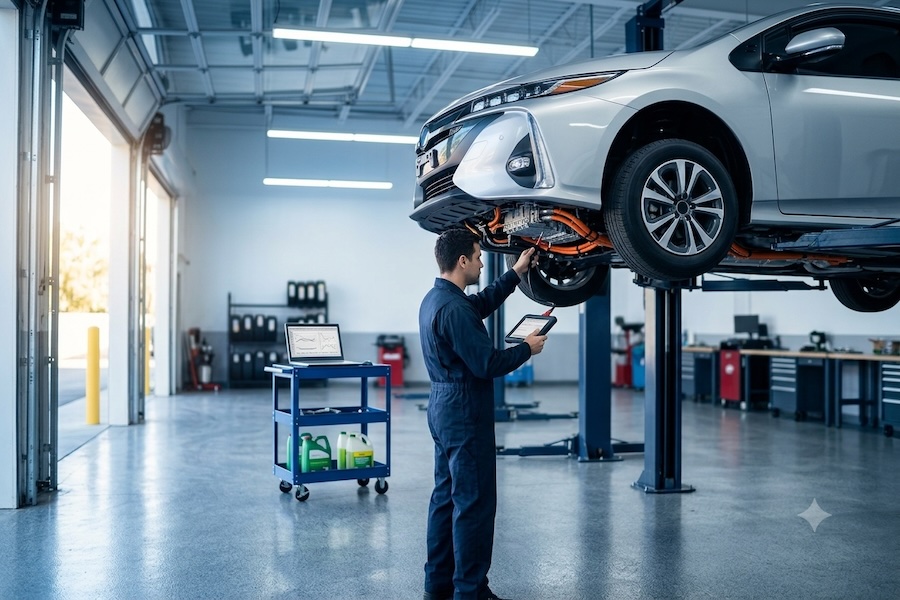
Every San Jose hybrid or EV uses at least two separate cooling loops, and most Teslas, Priuses and Ioniqs use three or four. One cools the battery, one cools the drive inverter and motors, another handles the cabin. These systems circulate specialized coolant that degrades faster in stop-and-go Bay Area traffic, where heat soak is constant. Toyota calls for a hybrid inverter coolant flush at 100,000 miles, but our San Jose hybrid shop sees inverter failures on cars that skipped it around 130,000. That repair runs $3,000 to $6,000 on a San Jose hybrid. A $200 flush prevents it.
What San Jose Hybrid Owners Should Schedule Now
Beyond tires and cooling, San Jose hybrid owners should put cabin air filter changes on the calendar every 15,000 miles, since Bay Area particulate levels stress the HVAC system harder than in cleaner regions. Have the 12-volt auxiliary battery load-tested annually because EV owners rarely realize their car’s electronics still depend on it. Any San Jose hybrid or EV over five years old also benefits from a full underbody inspection to catch corrosion around the battery tray, especially if you drive out to Santa Cruz. Small preventive work today saves the big repair bills tomorrow.