by Admin | Jul 5, 2026 | A/C, Auto Mechanic, Car Blog
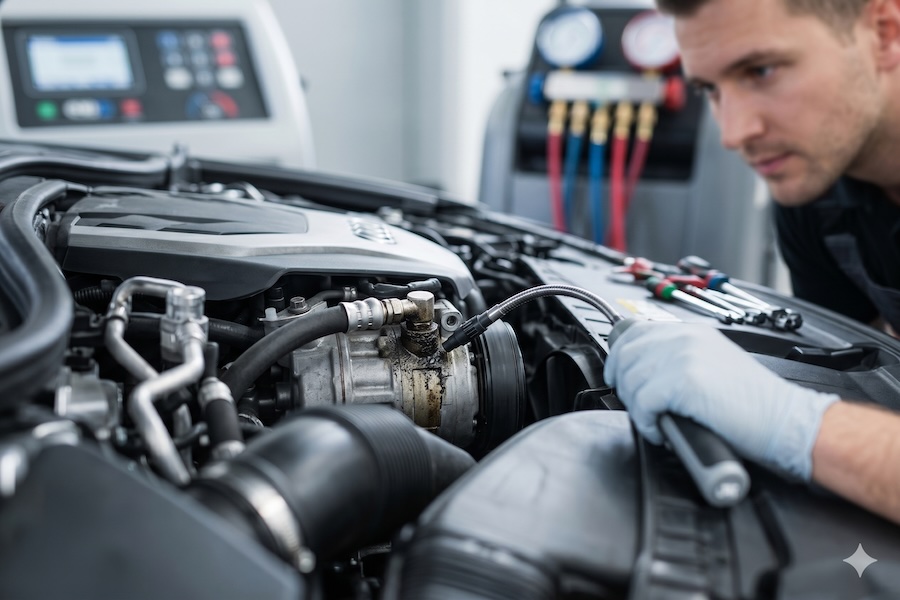
When the Santa Clara Valley summer arrives with triple-digit temperatures, a high-performing air conditioning system becomes your most important cabin feature. The AC system is a complex network designed for precision and efficiency. However, even the best-engineered systems can develop leaks over time. One of the most common signs that your refrigerant is escaping is a noticeable decrease in cooling power. You might find that the air blowing from the vents is merely lukewarm even when the dial is set to the lowest temperature.
Identifying Common Symptoms of AC Refrigerant Leaks
Another subtle sign of a leak is a distinct clicking sound coming from the engine bay. This happens when the AC compressor short-cycles because it lacks the necessary pressure to stay engaged. In some cases, you may notice an oily residue on the AC hoses or components. Since refrigerant often carries a small amount of lubricating oil, a leak will leave behind a greasy spot that attracts dust and grime. If you notice a faint chemical smell inside the cabin when you first turn the air on, it is a strong indicator that the evaporator core may be compromised. Addressing these signs early prevents the compressor from working overtime and burning out prematurely.
It is common for drivers to seek a quick fix by simply adding more refrigerant to the system. While a “top-off” might provide temporary relief, it does not address the underlying issue. An automotive air conditioning system is a sealed loop. If the refrigerant level is low, there is a physical breach somewhere in the lines, seals or components. Simply adding more gas is like trying to fill a bucket with a hole in the bottom. Eventually, the system will lose pressure again, often leaving you stranded in the heat during the hottest part of the day.
The Dangers of Temporary Refrigerant Top Offs
A note for European car owners—precision is everything. These systems require a very specific weight of refrigerant to operate at peak efficiency. Overfilling the system can be just as damaging as underfilling it, as it puts excessive pressure on the compressor and seals. Furthermore, when a leak exists, moisture from the outside air can enter the system. This moisture reacts with the refrigerant and oil to create an acidic sludge that corrodes the internal components from the inside out. A professional repair involves identifying the leak, replacing the faulty seal or hose and performing a vacuum test to ensure the system is moisture-free before recharging it to the exact factory specifications.
Feel free to schedule an appointment a few days before your trip to ensure your vehicle is working in tip-top shape.

by Admin | May 5, 2026 | Car Blog, Mazda
Mazda built its reputation on reliability. For decades, the Japanese automaker earned trust with vehicles that simply worked. That’s what makes the CX-70 and CX-90 situation so surprising and concerning for current owners and potential buyers.
The Promise vs. The Reality
When Mazda launched these flagship SUVs, they represented the brand’s boldest move upmarket. The CX-90 offered three-row seating while the CX-70 targeted buyers wanting a sportier two-row alternative. Both came with premium pricing to match their premium ambitions. Mazda offered these models in traditional gasoline powertrains and cutting-edge plug-in hybrid versions, betting that technology would attract luxury buyers.
Consumer Reports’ latest reliability survey tells a different story. Both models rank among the least reliable vehicles on the market, with problems persisting into their second model year. This isn’t just new-model growing pains anymore.
What’s Actually Breaking
The plug-in hybrid versions face the most serious issues. Owners report problems with the electric battery systems and motors, the very components that justify the PHEV’s premium price and environmental benefits. When these systems fail, owners lose the electric driving capability they paid thousands extra to obtain.
The gasoline versions aren’t trouble-free either. Reports indicate various mechanical and electrical problems that undermine the ownership experience. For vehicles costing between $40,000 and $55,000, these reliability scores represent a significant value problem.
What This Means for Owners and Shoppers
Current owners should stay vigilant about warranty coverage and document any issues immediately. Mazda’s warranty will cover most problems, but keeping detailed records helps if patterns emerge.
For shoppers considering these models, the data suggests caution. First and second-year models of redesigned vehicles typically experience the most problems, and these Mazdas fit that pattern perfectly. Waiting for Mazda to address these issues in later model years makes sense or consider Mazda’s more established models with proven reliability records.
The CX-5 and CX-50 maintain much better reliability ratings and offer most of what buyers want from Mazda. Sometimes the newest and flashiest option isn’t the smartest choice, especially when your daily transportation depends on it.

by Admin | Apr 20, 2026 | Auto Care Blog, Car Blog
Most drivers assume that shorter trips mean less stress on their vehicle. It seems logical. Fewer miles should equal less wear, right? The reality is quite different. Frequent short trips can actually be harder on your car than long highway commutes, and understanding why helps you maintain your vehicle properly.
The Problem with Cold Engines
Your engine needs time to reach its optimal operating temperature, typically around 10 to 15 minutes of driving. During this warm-up period, fuel combustion is less efficient and produces more byproducts. Motor oil hasn’t fully circulated or reached the right viscosity to protect internal components effectively. When you only drive a few miles at a time, your engine spends most of its life in this less-than-ideal cold state. Metal components experience more friction, and contaminants build up faster in your oil.
Moisture and Fuel Dilution
Short trips create another hidden problem. Condensation forms inside your engine and exhaust system as part of normal combustion. On longer drives, the engine gets hot enough to burn off this moisture. But with repeated short trips, water accumulates in places it shouldn’t be. This moisture mixes with oil, reducing its protective qualities and potentially causing corrosion over time. Unburned fuel can also slip past piston rings and dilute your oil, further compromising engine protection.
Battery and Exhaust System Strain
Starting your car demands significant battery power. Your alternator needs adequate driving time to fully recharge what was used during startup. Repeated short trips keep your battery in a partially depleted state, shortening its lifespan considerably. Your exhaust system suffers too. Catalytic converters need heat to function properly and burn off deposits. Stop-and-go short trips never let them reach full operating temperature, which can lead to premature failure.
If short trips make up most of your driving, consider taking your car on a longer drive once a week to let everything reach proper temperature. You should also follow the “severe duty” maintenance schedule in your owner’s manual rather than the standard intervals. This typically means more frequent oil changes and inspections. These simple adjustments help offset the extra wear and keep your vehicle running reliably for years to come.

by Admin | Apr 5, 2026 | Auto Mechanic, Car Blog
Your car communicates with you every time you drive. While warning lights grab your attention, unusual sounds often appear first and can reveal problems before they become expensive repairs. Knowing what to listen for helps you catch issues early and stay safe on the road.
Clicks and Ticking Noises
A rapid clicking sound when you turn the key usually points to a weak or dead battery. The starter motor is trying to engage but lacks the power to turn the engine over. If you hear a rhythmic ticking while driving, it could be something as simple as a small rock lodged in your tire tread. However, persistent ticking from under the hood might indicate low oil levels or a valve train issue that needs professional inspection.
Hums, Whines and Grinding
A low humming noise that changes with your speed often comes from worn wheel bearings or uneven tire wear. This sound typically grows louder over time and should be checked before the bearing fails completely. High-pitched whining during acceleration can signal power steering fluid running low or a failing alternator belt. Grinding sounds are almost never good news. If you hear grinding when braking, your brake pads have likely worn down to the metal backing plates and are damaging your rotors.
Rattles and Knocking
Rattles can be tricky because they range from a loose heat shield (annoying but not dangerous) to exhaust system problems that affect performance and emissions. Pay attention to when the rattle occurs. Does it happen only over bumps? That might be a suspension component. Only at idle? Possibly an engine mount. Knocking sounds from the engine are the most serious. A deep knocking that follows engine speed could indicate rod bearing failure, which requires immediate attention to prevent catastrophic engine damage.
The key is noticing changes from your car’s normal sounds. You know your vehicle better than anyone. When something sounds different, don’t ignore it. Bring it in so we can diagnose the issue before a small fix turns into a major repair bill. Early detection saves money and keeps you safely on the road.

by Admin | Jan 20, 2026 | Car Blog, Diagnose Car Problems
With fuel costs always on the rise every driver needs to look for ways to maximize their miles per gallon.
While aggressive driving habits certainly play a role on your gas mileage, the simplest and most effective way to boost efficiency has nothing to do with driving slowly. It’s about consistent maintenance. A healthy, well-maintained engine is inherently more fuel-efficient than one that’s struggling with resistance or restricted airflow.
The Tire Pressure and Air Filter Connection
The two easiest fixes are also two of the most effective.
First, tire pressure: underinflated tires increase rolling resistance, forcing your engine to work harder just to maintain speed. Check your owner’s manual or the sticker inside the driver’s side door jamb for the correct PSI and check it monthly.
Second, your air filter: a clogged or dirty engine air filter starves the engine of the necessary air for combustion. When this happens, the engine compensates by burning more fuel to create the same power, drastically reducing your efficiency. Replacing a dirty air filter is cheap and restores power and efficiency instantly.
Engine Health and the Right Oil
Oil acts as a lubricant, reducing friction inside the engine. The less friction, the less energy is wasted. Using the manufacturer-recommended oil weight (often a fully synthetic blend) ensures maximum protection and minimal resistance.
Furthermore, ensure your spark plugs are replaced on schedule. Old, fouled spark plugs lead to incomplete combustion, meaning your engine is literally throwing away unburned fuel with every cylinder misfire. Regular tune-ups focusing on these simple components will deliver tangible savings every time you fill up.
Call for an Appointment
Give us a call and have your vehicle checked out and keep it well-maintained. This will extend your car’s life, as well as keep your mpg as high as possible.
by Admin | Nov 20, 2025 | Car Blog, Oil Changes
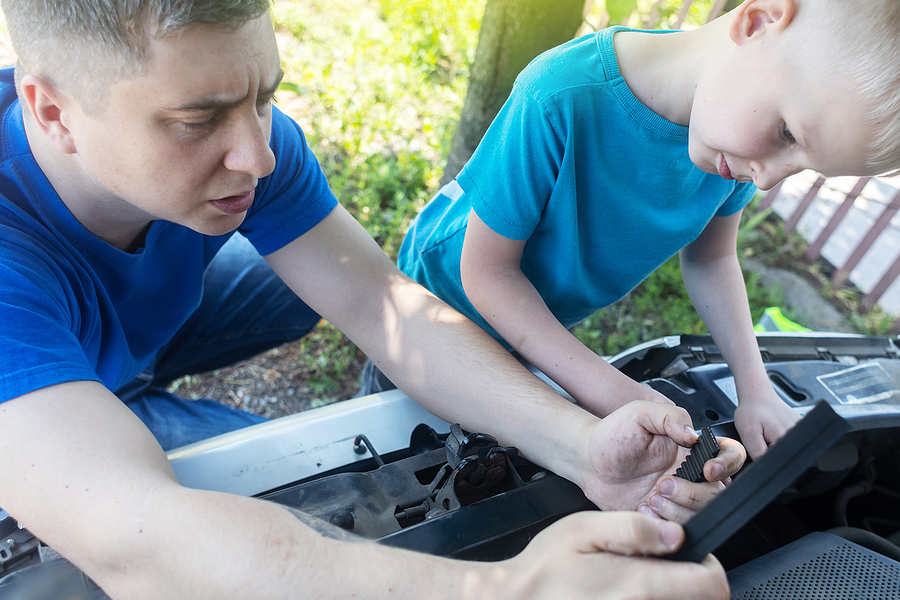
Vehicle maintenance involves several things you can safely perform yourself by using basic mechanical tools and a little knowledge. While complex repairs require professional expertise, routine maintenance items can be handled at home. It helps you stay connected to you vehicle’s condition and potentially saves on maintenance costs.
Here are Some DIY Maintenance Ideas
Coolant level monitoring should be high on your self-maintenance list. Be sure the engine is completely cool. Open the hood and locate the coolant reservoir. It’s typically a translucent plastic container marked with minimum and maximum fill lines. The coolant should remain within the specified range that is marked on that container. It’s always best to use purchased coolant for all weather, then you’re covered for when it gets frosty outside.
Brake pad inspection provides valuable information about your vehicle’s safety systems. Visual inspection through the wheel spokes allows owners to assess brake pad thickness without removing wheels. The brake pad material should measure at least one-quarter inch thick. When pad material appears thin or metal backing plates become visible, or you’re hearing a loud grinding, bring it in for us to check.
Air filter replacement for the interior improves interior air quality and heating/ac efficiency. Most cabin air filters are located behind the glove compartment and can be replaced in approximately ten minutes. A clogged filter restricts airflow and forces the heating and air conditioning systems to work harder, reducing efficiency and comfort.
Engine air filter maintenance directly affects engine performance and fuel efficiency. The air filter housing, typically a rectangular or round plastic assembly near the engine’s top, contains the filter element. A clean filter appears light in color, while a dirty filter looks dark gray or black and requires replacement.
Oil changes are best left to the mechanic. We have the correct quality parts, tools and experience to get the job done quickly without damaging anything. We can also recycle the old, dirty oil. This is an affordable service that is really worth the price.
While these basic maintenance tasks are manageable for most car owners, professional diagnosis becomes necessary when unusual symptoms develop. Strange noises, warning lights, or other concerning signs warrant immediate professional attention. A1 Performance Auto Repair provides comprehensive vehicle inspections to identify and address issues before they result in costly failures or safety concerns. Give us a call for an appointment.