
by Admin | Jul 20, 2026 | Auto Mechanic, BMW
When you take a trip on Highway 17 to Santa Cruz for your favorite weekend tradition, be aware the journey demands a lot from your vehicle. This stretch of road is famous for its steep grades, sharp curves and unpredictable traffic patterns. So, before you load up the Bimmer or van with beach gear and your family, do a thorough maintenance check.
What to Check Before Travel Day
Tire and Brake Integrity for the Santa Cruz Commute
The first priority should always be your tires. Because Highway 17 requires constant cornering, your tire sidewalls experience significant stress. Ensuring your tires are inflated to the manufacturer’s recommended cold pressure is vital for maintaining grip and preventing heat buildup. Under-inflated tires generate excessive heat when climbing steep hills, which can lead to a blowout at highway speeds.
You should also inspect the tread depth and look for any uneven wear patterns that might suggest an alignment issue.
While checking the tires, do not overlook the braking system. The descent back down the mountain puts immense pressure on your brake pads and rotors. If you feel a vibration in the steering wheel or hear a high-pitched squeal when slowing down, your brakes may be thin or warped. For Bimmers, using high-quality rotors and pads is crucial to prevent brake fade during long downhill stretches where heat management is most critical.
Consider the Powertrain
The climb toward the summit of Highway 17 is a true test of your vehicle’s powertrain. When a Bimmer or van is fully loaded, the transmission has to work much harder to find the right gear for the incline.
Transmission Maintenance for Steep Mountain Inclines
When the transmission is working harder, it generates internal heat that can degrade transmission fluid quickly. If your fluid is old or low, the transmission might hunt for gears or shift harshly, which can lead to expensive internal damage. Checking the health of your transmission fluid before a mountain trip ensures that the gears stay lubricated and cool under the heavy load of a mountain ascent.
Examine the Cooling System
Equally important is the cooling system. Some engines are designed to run at specific temperature ranges, and a steep grade in summer heat pushes those limits. A small cooling system leak that goes unnoticed during a flat commute across town can quickly become a major failure when the engine is under load. Check your coolant levels and inspect the radiator hoses for any soft spots or bulging. A fresh coolant flush with the correct spec fluid ensures that heat is moved away from the engine block efficiently.
By taking the time to verify these systems are in top shape, you can enjoy the drive to the coast with the peace of mind that your vehicle is prepared for the challenge.
by Admin | Jul 5, 2026 | A/C, Auto Mechanic, Car Blog
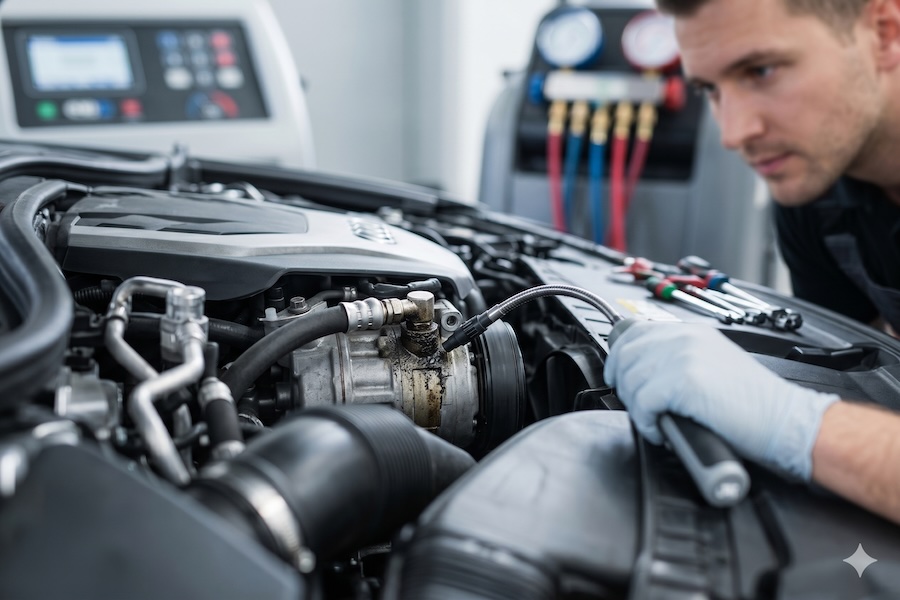
When the Santa Clara Valley summer arrives with triple-digit temperatures, a high-performing air conditioning system becomes your most important cabin feature. The AC system is a complex network designed for precision and efficiency. However, even the best-engineered systems can develop leaks over time. One of the most common signs that your refrigerant is escaping is a noticeable decrease in cooling power. You might find that the air blowing from the vents is merely lukewarm even when the dial is set to the lowest temperature.
Identifying Common Symptoms of AC Refrigerant Leaks
Another subtle sign of a leak is a distinct clicking sound coming from the engine bay. This happens when the AC compressor short-cycles because it lacks the necessary pressure to stay engaged. In some cases, you may notice an oily residue on the AC hoses or components. Since refrigerant often carries a small amount of lubricating oil, a leak will leave behind a greasy spot that attracts dust and grime. If you notice a faint chemical smell inside the cabin when you first turn the air on, it is a strong indicator that the evaporator core may be compromised. Addressing these signs early prevents the compressor from working overtime and burning out prematurely.
It is common for drivers to seek a quick fix by simply adding more refrigerant to the system. While a “top-off” might provide temporary relief, it does not address the underlying issue. An automotive air conditioning system is a sealed loop. If the refrigerant level is low, there is a physical breach somewhere in the lines, seals or components. Simply adding more gas is like trying to fill a bucket with a hole in the bottom. Eventually, the system will lose pressure again, often leaving you stranded in the heat during the hottest part of the day.
The Dangers of Temporary Refrigerant Top Offs
A note for European car owners—precision is everything. These systems require a very specific weight of refrigerant to operate at peak efficiency. Overfilling the system can be just as damaging as underfilling it, as it puts excessive pressure on the compressor and seals. Furthermore, when a leak exists, moisture from the outside air can enter the system. This moisture reacts with the refrigerant and oil to create an acidic sludge that corrodes the internal components from the inside out. A professional repair involves identifying the leak, replacing the faulty seal or hose and performing a vacuum test to ensure the system is moisture-free before recharging it to the exact factory specifications.
Feel free to schedule an appointment a few days before your trip to ensure your vehicle is working in tip-top shape.

by Admin | Apr 5, 2026 | Auto Mechanic, Car Blog
Your car communicates with you every time you drive. While warning lights grab your attention, unusual sounds often appear first and can reveal problems before they become expensive repairs. Knowing what to listen for helps you catch issues early and stay safe on the road.
Clicks and Ticking Noises
A rapid clicking sound when you turn the key usually points to a weak or dead battery. The starter motor is trying to engage but lacks the power to turn the engine over. If you hear a rhythmic ticking while driving, it could be something as simple as a small rock lodged in your tire tread. However, persistent ticking from under the hood might indicate low oil levels or a valve train issue that needs professional inspection.
Hums, Whines and Grinding
A low humming noise that changes with your speed often comes from worn wheel bearings or uneven tire wear. This sound typically grows louder over time and should be checked before the bearing fails completely. High-pitched whining during acceleration can signal power steering fluid running low or a failing alternator belt. Grinding sounds are almost never good news. If you hear grinding when braking, your brake pads have likely worn down to the metal backing plates and are damaging your rotors.
Rattles and Knocking
Rattles can be tricky because they range from a loose heat shield (annoying but not dangerous) to exhaust system problems that affect performance and emissions. Pay attention to when the rattle occurs. Does it happen only over bumps? That might be a suspension component. Only at idle? Possibly an engine mount. Knocking sounds from the engine are the most serious. A deep knocking that follows engine speed could indicate rod bearing failure, which requires immediate attention to prevent catastrophic engine damage.
The key is noticing changes from your car’s normal sounds. You know your vehicle better than anyone. When something sounds different, don’t ignore it. Bring it in so we can diagnose the issue before a small fix turns into a major repair bill. Early detection saves money and keeps you safely on the road.
by Admin | Mar 5, 2026 | Auto Care Blog, Auto Mechanic
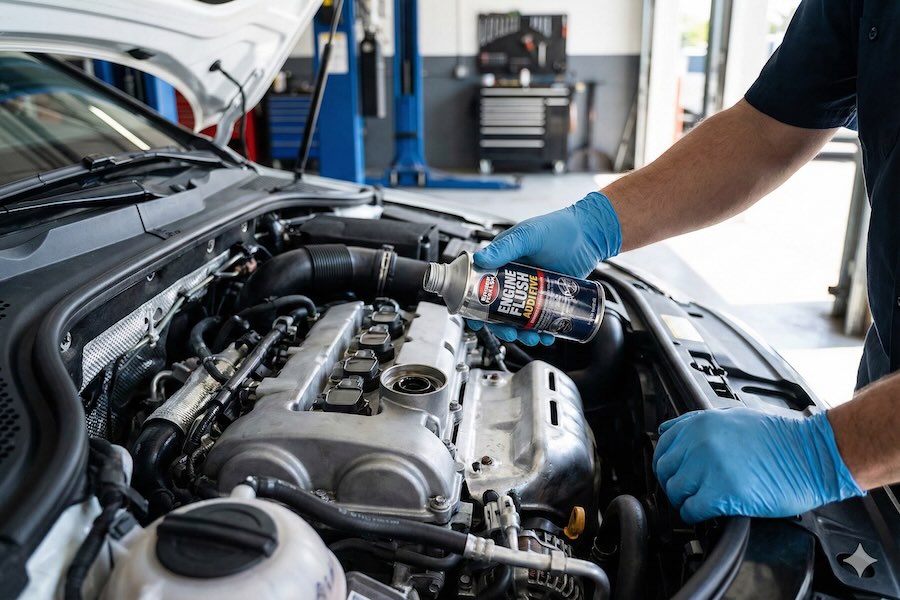
Most vehicle owners know that regular oil changes are crucial for vehicle health. However, there is a common misconception that simply draining old oil and adding fresh oil gets the entire inside of the engine clean. Unfortunately, over time, heat and normal wear cause oil to break down into sticky varnish and thick sludge that an ordinary oil change cannot remove. This buildup is where an engine flush becomes vital for long-term performance.
The Invisible Sludge Build-Up
Modern engines are marvels of engineering, built with tighter tolerances than ever before. They also run hotter. While high-quality synthetic oils are designed to handle this heat, thousands of miles of stop-and-go driving take their toll. As oil oxidizes, it leaves behind deposits on critical internal components.
Think of it like cooking grease in a pan. If you just wipe it out with a paper towel, a sticky residue remains. Over time, that residue cooks onto the surface. In your engine, this sludge restricts oil flow, clogs vital pathways and prevents fresh oil from reaching parts like camshafts and lifters. This friction leads to premature wear and potential engine failure.
Clearing the Pathways
A professional engine flush is a targeted cleaning process performed right before an oil change. We add specialized chemical cleaners to the engine’s old oil. The vehicle is then run for a specific period to allow these chemicals to circulate.
The cleaning agents dissolve the baked-on varnish and liquefy the sludge suspended in the engine. When we drain the old oil, all that harmful buildup drains out with it. It is essentially a reset button for your engine’s internal cleanliness.
The Performance Advantage
The immediate benefit of an engine flush is that your new, clean oil goes into a clean environment. It doesn’t immediately mix with old sludge, allowing it to do its job better and last longer.
By ensuring oil passages are clear, lubrication improves significantly. This helps the engine run cooler, quieter and more efficiently. For performance vehicles or older cars with unknown maintenance histories, an engine flush is cheap insurance against catastrophic repairs down the road. It restores power and efficiency that was lost to internal friction.

by Admin | Jun 20, 2022 | Auto Care Blog, Auto Mechanic, Uncategorized
Early discovery of transmission issues can save you big bucks in repair bills. Transmission failure is not hard to detect when you’re keen enough. Don’t wish the problem away when you notice something is amiss because it will not.
Visit your garage service when you notice any of the following symptoms.
Leaking Fluid
A pool of reddish fluid under your car is the most straightforward indicator of identifying a transmission problem. Let your mechanic know when the trouble starts, and they’ll check the transmission fluid level.
Burning Smell
A burning smell is a powerful indicator of something wrong with the transmission. The transmission may be overheating, or the transmission fluid may be burnt and old.
Dragging Clutch
A failure to disengage the clutch disc when you press the clutch pedal causes a clash of the gears. The leading cause of a dragging clutch is clutch misplacement and mechanical failure.
Difficulty in Switching Gears
When changing gears becomes a daily struggle, your transmission system is in the process of giving in. Sometimes, it could be you’re using the incorrect type of transmission fluid, or the transmission fluid is leaking somewhere.
Slipping Gears
A slipping transmission is dangerous and a telltale sign that the system is broken. A delay in acceleration and general harsh response when shifting gears and revving indicate slipping gears.
Sometimes, the gear change will be unresponsive when moving from park to drive.
Noises when You’re in Neutral
Weird noises when the vehicle is in neutral are not a good sign. At the minimum, it can mean the transmission fluid is overdue for a change, or the system needs a check by a professional.
Other strange noises such as humming, clunking and whining when driving are not good signs. Let a professional have their hands on it immediately.
A1 Performance Auto Repair can check your transmission and repair it if needed. We can also inspect for other problems and ensure your car is whole again for daily use.

by Admin | May 20, 2022 | Auto Care Blog, Auto Mechanic
Gas prices are at an all-time high, and you want your car to get as close as possible to the manufacturer estimated gas mileage figures. Your car needs attention if it is not getting quite the miles-per-gallon it should be, or its fuel economy has reduced significantly.
Causes of Poor Fuel Economy
Low tire pressure is one of the most prevalent causes of poor fuel economy, and it is thankfully a simple fix. For every other fill-up, we recommend checking the air pressure in all of your tires (including the spare). Keep a tire gauge in your car and check the pressure while filling up your gas tank.
Your oxygen sensor could also be the source of the problem. If it fails, it might reduce your car’s fuel efficiency by 20%. Because a filthy or clogged air filter can cause the same problems, make sure to replace it at the specified mileage intervals.
Clogged fuel injectors can reduce fuel efficiency. The fuel injectors and spark plugs work together to ignite the fuel in your engine. Your fuel economy will suffer if you don’t change your spark plugs regularly. Spark plugs should be changed every 30,000 to 100,000 miles. This service is dependent on the make, model, and year of your car. Motor oil that is dirty or old might also be a problem. Your vehicle will run more efficiently if you maintain it regularly.
How You Can Help the Situation
You can also inadvertently impair your fuel efficiency. Operating your air conditioning during summer will reduce your fuel economy. If you are driving slowly, roll down your windows.
Driving at a slower speed saves you money on gas. Do not press the gas pedal to the floor, slam on the brakes, and repeat. This action decreases your fuel efficiency as well. Maintain a calm demeanor behind the wheel and be kind to your vehicle.
We recommend you bring your car in for a tune-up every two years for its first 60,000 miles and every year after that. Get your next tune-up done at A1 Performance Auto Repair. We would ensure that this is done professionally by offering you world-class services. Give us a call and be glad you did.