by Admin | Dec 20, 2025 | Electric Cars, Toyota, Used Cars
The federal tax incentive that has helped make electric vehicles more affordable for American buyers was eliminated on September 30, 2025. Governor Newsom has confirmed that California won’t be replacing this credit that was helpful to consumers and EV sellers. The $7,500 tax credit has been a cornerstone of EV adoption since its introduction, but its removal is sending shockwaves through the automotive industry.
Additionally, The New Clean Vehicle Credit, Previously-Owned Clean Vehicle Credit and Qualified Commercial Clean Vehicle Credit will not be available for vehicles purchased after September 30, 2025. Speak with your tax preparer, if this affects your tax filing.
How Automakers Will Respond to Lost Incentives
The elimination of the $7,500 tax credit puts significant pressure on automakers who have invested billions in electric vehicle development. Without this incentive, EVs become substantially more expensive compared to their gas-powered counterparts, potentially slowing the momentum of the industry’s electric transition. Manufacturers may be forced to reduce vehicle prices to remain competitive, cutting into already thin profit margins on EVs. Some brands might scale back production plans or delay new model launches until battery costs decrease naturally. Legacy automakers who recently committed to electric lineups face particularly difficult decisions about their investment strategies.
What This Means for EV Sales and Buyers
The immediate impact on consumers is clear: electric vehicles will effectively cost $7,500 more without the federal incentive. This price increase could push many budget-conscious buyers back toward traditional gasoline vehicles or hybrids. Industry analysts predict EV sales growth could slow significantly, potentially reversing years of steady adoption gains. However, this change might also accelerate innovation as manufacturers seek ways to produce more affordable electric vehicles without government support.
For buyers considering an EV purchase, keep an eye on advertisements on manufacturers websites. You might benefit as automakers potentially lower prices to maintain market share.
At A1 Performance Auto Repair, we’ll continue servicing all vehicle types as the market evolves.

by Admin | Jun 5, 2025 | Toyota, Uncategorized
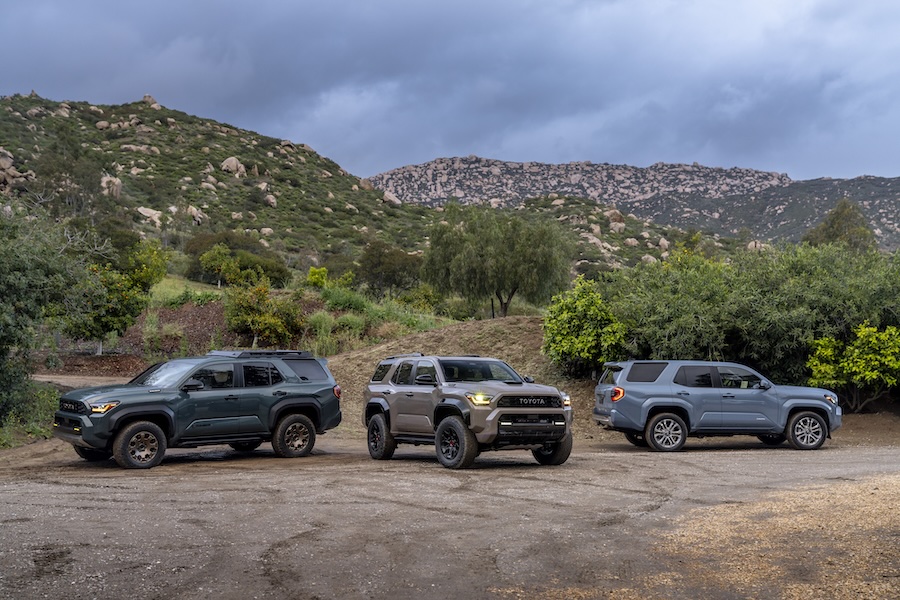
If you’re thinking of upgrading your vehicle right now to avoid tariffs, you might be making a very smart move. It could save you $10,000s if those huge tariffs are put into effect. When buying a Japanese new vehicle, the 2025 Toyota 4Runner is definitely worth taking for a test drive.
What’s New Overview
This is the 6th generation of the 4Runner (after 15 years of model popularity) and it looks like Toyota is on a roll with making their customers very happy. Some of the updates include: powertrains and the new 8-speed automatic transmission. And new this year, the addition of the TNGA-F platform.
Exterior Highlights for This Year
If you’re a big Toyota fan, you’ll notice right away that the front end strongly resembles the Tacoma now. It’s a good 3” wider that previous models. The fenders are more prominent to allow for the now larger tires and very cool trims. The wheelbase has been extended by 2.4 inches. If you remember the rear side window upper edge going up into the roof years ago, well this slick feature has returned for 2025.
What’s On the Inside
Again, we have some Tacoma features going on with the 4Runner, especially with instrument clusters, center stacks, and controls. They’re popular with the Tacoma, so why not share? You’ll find easy connectivity to using wireless CarPlay and Android Auto. There’s plenty of storage and the organization inside is very user intuitive.
The Powertrain
You’ll have a choice of i-Force 2.4-liter turbocharged four-cylinder engine or the i-Force Max hybrid powertrain. The i-Force Max gives you the electric motor addition and that helps save on fuel. But it also increases the power to 326 HP.
The 2025 Toyota 4Runner
All in all, it is well-worth a test drive. While the trims are the usual choices, nothing really new there, but there’s plenty of other new features and options that have been making consumers very excited. If you buy quickly, you might get to save many $1000s by escaping the massive tariffs that might happen soon.
by Admin | Nov 20, 2024 | Hydrogen, Toyota
In this technological era, is hydrogen truly the key to fueling innovation one atom at a time?
Well, the decline of LPG-powered cars, however, may cast doubt on this vision.
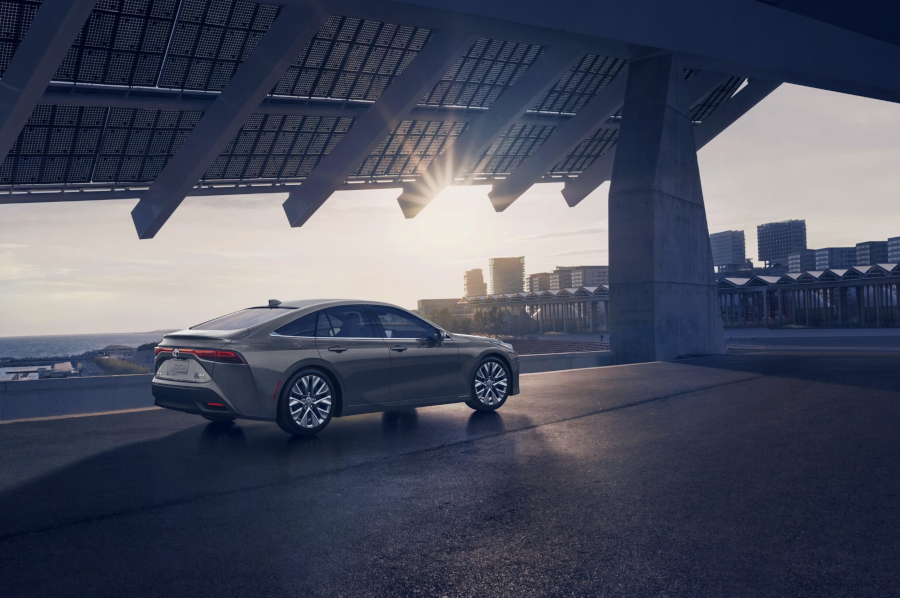
While electric vehicles (EVs) are gaining momentum, hydrogen fuel cell vehicles, like Toyota’s Mirai, offer another potential path to green mobility.
But will they face the same fate as LPG-powered cars, or can they carve out a sustainable niche in the market?
Earth-Friendly Commuting
Hydrogen-powered cars, much like their LPG counterparts, offer significant environmental benefits. They emit only water vapor, and so are a clean alternative to conventional vehicles.
Toyota’s commitment to hydrogen technology underscores its potential, with the Mirai serving as a flagship for this innovative approach.
However, the story of LPG vehicles in Europe serves as a cautionary tale.
Despite their eco-friendly credentials and lower fuel costs, LPG cars are being phased out due to disappointing sales and a shift in focus towards electric vehicles. This raises questions about the long-term viability of hydrogen-powered cars.
The environmental importance of hydrogen vehicles is clear. They offer zero-emission driving without the range anxiety associated with battery-electric vehicles. Moreover, hydrogen can be produced using renewable energy, potentially creating a closed-loop, carbon-neutral transportation system.
Does it Make Business Sense?
The answer is complex. Like LPG vehicles, hydrogen cars face significant infrastructure challenges. The number of hydrogen refueling stations is limited, which could deter potential buyers.
Toyota and other proponents argue that it’s easier and quicker to build hydrogen infrastructure than to upgrade the electric grid for widespread EV adoption.
From a manufacturing perspective, hydrogen fuel cell technology is more complex and currently more expensive than battery-electric systems. However, proponents argue that costs will decrease with scale, and hydrogen vehicles offer advantages in weight and refueling time, particularly for larger vehicles and long-distance transport.
Possible Fate of Hydrogen-Powered Vehicles
The fate of hydrogen-powered cars may ultimately depend on government policies, industry commitment, and consumer acceptance.
While the shift away from LPG vehicles in Europe might seem discouraging, it’s worth noting that different regions may adopt different solutions.
Japan, for instance, is heavily investing in a hydrogen-based economy, which could provide a strong base for hydrogen vehicle adoption.
by Admin | Jan 5, 2023 | Auto Care Blog, Toyota
An evaporation system controls the engine’s temperature by taking excess heat from the engine and transferring it to the air outside your car. This process allows your vehicle to run more efficiently, which helps save you money on fuel costs.
Rav4 may be more affected by this evaporation system issue than any other brand.
Where Does the Evaporator Issue Come from?
There are several issues with the evaporator system in the Rav4, and the most common is a leak in the evaporator core. When this happens, you will hear a hissing sound when you turn off your car and open the door. This is because air pressure gets lost when you open the door, and air flows out of the cabin through the hole where the evaporator core is leaking.
The other issue that can happen is if there is a problem with your blower motor. In this case, you might see smoke from your vents or smell something burning inside your car. This is because your heater core has failed and started to overheat. The lack of circulation causes it to melt away from under your dashboard.
It can also be a clogged evaporator core. The evaporator core is the part of your air conditioner that cools the air from your vents. When it gets clogged, it stops cooling properly. You’ll know this is happening if your car feels warm even though your heater and defroster are turned on.
Also, when the expansion valve leaks or is stuck open, it causes an overfill of refrigerant in the system. This causes an increase in pressure and makes it harder for your compressor to work properly. The result? Poor performance from both the AC and heating systems!
It could also be a leak somewhere (usually at a fitting). The refrigerant leaks out, reducing pressure in the system and causing poor performance from both systems mentioned above and decreasing fuel economy.
If either of these things happens to you, we recommend taking it to a repair shop so they can diagnose exactly what’s wrong with it and replace any parts that need replacing at an affordable price. A1 Performance Auto Repair will diagnose any issues with your Rav4 in Sunnyvale, California, and fix it.

by Admin | Oct 20, 2022 | Toyota
Toyota Crown is entering the US market with an unconventional and exciting design, created by crossing a sedan and sports utility vehicle. Toyota calls it a premium design with a higher ride height – hard not to agree. The 2023 Crown has a flashy demeanor and is available in two hybrid options.
Engine and Performance
Toyota debuts the lifted Crown sedan with three trims. Under the bonnet of XLE and Limited is a 2.5L 4-cylinder power plant paired with a new nickel-metal-hydride battery-powered trio of electric motors. Drivers have up to 236 horses of power at their disposal and an electric-only driving option over short distances.
The “Hybrid Max,” a new hybrid system, is only available for the Platinum trim. It combines a 2.4L turbo inline-4 hybrid power plant with a six-speed auto transmission. An e-motor sits on the rear axle to provide an extra boost of power, which Toyota claims is 340 hp. The fuel economy gets a hit compared to the base hybrid (38 mpg) to 28 mpg.
The Crown boasts active cornering assist to reduce understeer when driving in corners.
Interior Features
2023 Crown best defines a cross between simplicity and sleek design. Most of the dash is colonized by a 12.3-inch touchscreen and a gauge cluster. However, there’s a row of physical buttons just below the screen. These are for climate control.
Charging USB ports (including a pair of USB-C outlets) are plenty. The XLE has exclusively black power-heated fabric and synthetic leather front seats. Upgrading to Limited or Platinum adds heated rear seats, while the driver and front passenger get ventilated leather seats.
Crown Platinum’s cabin is reasonably quiet and comfortable, creating a feeling of riding in a genuinely premium sedan. It has effective soundproofing material and acoustic glass. Clearly, Toyota have outdone themselves with this Crown Sedan, and vehicle buyers couldn’t be happier.
by Admin | Aug 20, 2021 | Toyota
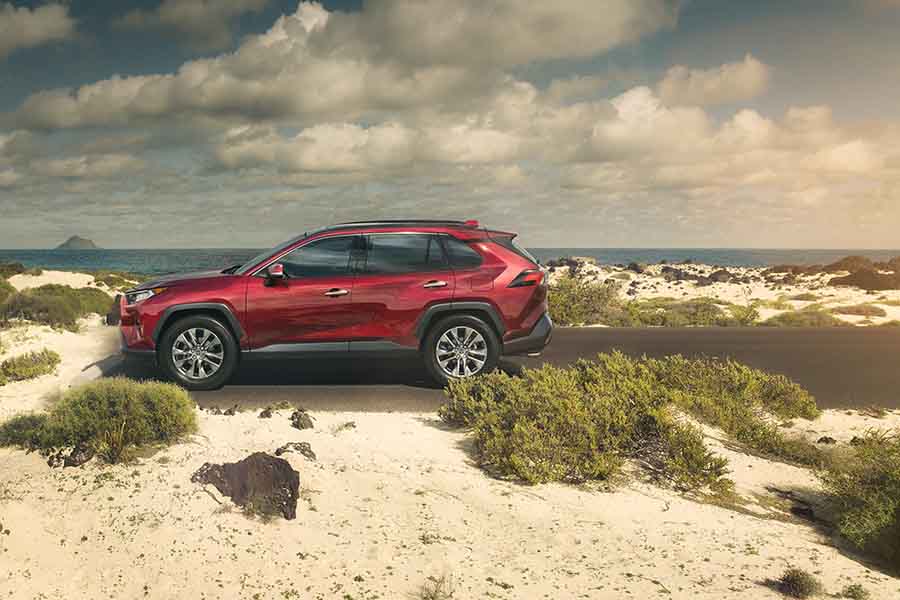
RAV4’s irresistible square-jawed design, smooth drive, and spacious accommodation have bribed many people into falling in love with them. But far from its adorable nature, Rav4 may have a couple of undesirables in transmission and steering problems.
Transmission Issues
The transmission issues are pretty standard with the 2019 model.
The symptoms of the problem include a lurch forward at low speeds, and a forceful shift into gear that may produce loud clunks and bangs. Others experience some lagging or failure to shift.
Sometimes, there will be a delay when pressing the gas, and at times, it may suddenly lurch forward. This will cause dangerous entry in traffic.
People have difficulty determining the cause of these transmission problems, even after taking the vehicle to the dealership. In most cases, a reset is done but does very little to help. So what helps?
Normally, the brand recommends transmission ECU replacement and programming, which is quite an expensive fix. So, is there an alternative?
It is possible to get RAV4 ECU replacement units with the latest version installed without visiting the main dealer.
Steering Problems
Steering problems are far too common for the 2017 model. Many Rav4 owners experienced a pull towards the side when the vehicle encountered heavy crosswinds or had a flat tire. Some reported a knocking sound when locking up in traffic.
Several owners took the vehicle to the dealerships, and the tires were rotated and realigned. However, this did nothing to solve the issue. In some cases, the problems got worse with issues such as vibrations on the steering wheel. The best solution for the problem is primarily a steering wheel software update.
A1 Performance Auto Repair has automatic transmission specialists and experienced technicians that will check your vehicle for problems and provide solutions.